Wednesday, May 25, 2011

AASL Lesson Plan Database


The American Association of School Librarians recently introduced a Standards for the 21st Century Learner Lesson Plan Database.  As one would expect, the lesson plans meet the Standards for 21st Century Learners!  The plans are searchable by basics like grade level and subject area, but are by more specific criteria like collaboration level, lesson time, and resources needed. All lessons in the database are vetted by AASL reviewers, so you can trust the quality of the lesson. 

Using the database requires an account and logging in.  The registration process is quick and painless! Once registered, users can bookmark lessons, rate and comment on lessons, share lessons via social media, and publish lessons to the database. 

This is an excellent tool to help school library professionals work smarter!

Tuesday, May 17, 2011

Merriam-Webster.com

 Merriam-Webster.com is a great resource for more than just definitions of words. 

In addition to definitions and synonyms, M-W.com also has an audio pronunciation of words. Non-native English speakers can use this feature to hear a correct pronunciation as well as see the pronunciation and spelling.

The word of the day email is a great way to expand your (and your students') vocabulary.  Word of the day as a regular feature in the library is a great way to get the whole school on a vocabulary expanding kick!
 
Another fun and useful feature is 10 Ways to Improve Conversation.  Use Merriam-Webster's list, or customize your own list of current vocabulary words for students to work into their conversations and school work. 

Wednesday, May 11, 2011

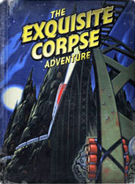
Library of Congress : Exquisite Corpse Adventure

The Exquisite Corpse Adventure is another great idea from the Library of Congress website.

An exquisite corpse is a collaborative work in images or text in which each person adds to the others'.  The LC's Exquisite Corpse Adventure was started by Jon Sczieska and features other writers like Kate DiCamillo, Nikki Grimes, and M.T. Anderson, so you know it will be good!  The story segments are great read aloud material, there are also podcasts to listen to, and an accompanying game to test students' reading/listening comprehension.  The game is a fun interactive style with images, so students will enjoy testing themselves.  The text, podcast, and game is appropriate for upper elementary through high school. 

Any age group can create their own exquisite corpse. Once students understand the concept, groups of three or four can get started.  Depending on the time available and the age group, each student can contribute a sentence, a paragraph or a page to the exquisite corpse.  This is a great opportunity for collaboration with the English teacher and the Art teacher.  Students can augment their original text with original art work. 

Wednesday, May 4, 2011

Thirteen Reasons Why by Jay Asher

When Clay Jensen receives a box of audio tapes in the mail from the girl he had a crush on, he is led through the reasons why she committed suicide.  Hannah Baker explained her thirteen reasons to thirteen people who played a role in her death.  The audio tapes make their way from person to person like a chain letter. 

This book has had so many accolades that I really wanted to like it. Asher's writing style is interesting and engaging, but the premise of the book is heavy-handed.  The device of the audio tapes is a unique way to have a deceased character in the story, but it often feel contrived and does not effectively convey Hannah's emotional state. As an adult reader, Hannah's reasons struck me as very temporary and not cause for self-harm.  I realize that many teenagers can not see past this moment and the problems they encounter are often overwhelming. For that reason,  I think that teen readers would relate to many of the problems Hannah had and it would make for an interesting discussion with their reactions.

Interest/Reading Level: Grades 11-12

Georgia Performance Standards:

ELAACRAC3 The student synthesizes content information and stylistic devices from the reading to demonstrate improvement in writing.

ELA12LSV2 The student formulates reasoned judgments about written and oral communication in various media genres. The student delivers focused, coherent, and polished presentations that convey a clear and distinct perspective, demonstrate solid reasoning, and combine traditional rhetorical strategies of narration, exposition, persuasion, and description.

Activities: Students come up with their own idea of how a character communicates from beyond the grave through non-paranormal means.  With so many media choices available, students can choose one medium or a variety of mediums working together. For example, a blog with scheduled posts that are published after death, videos that can be found only through scavenger hunt clues sent through the postal service, the possibilities are unlimited!

Two class periods would be needed for this project.  Class one - group discussion of the use of the cassettes as a literary device, rate it's effectiveness, discuss why or why not.  Students begin working on their own short story using their chosen device.  If necessary, students continue working on the story as homework. The story should be at least one page, should set up the device to work in the story, and may be part of a larger story.

Monday, May 2, 2011

Library of Congress : Letters about Literature

Today's post is another great find at the Library of Congress website.  Letters about Literature is a contest sponsored by the Center for the Book in the Library of Congress.  The contest is open to students from 4-12 grades.  Students write a letter to the author of his or her favorite book or a book that changed his or her life. The winners of the contest receive national recognition and a prize for their school library. 

The concept of this contest would easily translate into a project for an English class.  Rather than write a book report, students write letters to the author in which they explain what they liked (or disliked) about the book, why they felt this way, and how the book has (or has not) made an impact.  Writing a letter can make the students' experience with the book more personal and give them a way to be a little more creative with reporting on the material.

An excerpt from a winning letter:
  
Dear Rudyard Kipling,

My dad is a six-foot tall, deep-voiced, husky eastern European rock of a man. In fact, all the men on my dad’s side of the family are a bunch of Romanian macho hunks with bulging biceps and visages as stony and solemn as a statue. Genetically, I have these same features yet, because of my mother’s influence, I am much softer on the inside...

Your poem was so much more than just a simple list of guidelines or morals that some see it as; it really changed my life and my relationship with my dad. Because of “If,” I am able to walk with my chest pushed out like a man not because of bulging pectoral muscles but because of the heart under them.

With admiration and thanks,
Joshua Tiprigan

Thursday, April 28, 2011

Library of Congress : Civil War Resources

I've been spending some time on the Library of Congress website the last few days.  There are so many wonderful resources there!  In the next few posts, I will highlight resources of interest, but there is far too much to cover in a few blog posts.  Head over to their website and check it out!


The Civil War resources at the Library of Congress cover the gamut from  Reconstruction, to Abraham Lincoln, to Slavery and Abolition. Photographs, official papers, personal accounts, and maps are available.  With such a wide range of multi-media materials, students in both middle and high school will be able to locate pertinent information.

Additionally, the Historic Papers section dates back to 1860 and students can view the actual newspaper pages. 

Tuesday, April 19, 2011

National Poetry Month

It's more than halfway over, but it is still National Poetry Month!


Quick Picks for Readings 

Elementary 

Lemonade : and Other Poems Squeezed from a Single Word by Bob Raczka

Both puzzles and poetry make up this fun book.  Raczka uses one word to create each poem, as the title points out.  The fun part is seeing how he gets an entrie poem out of only the letters in the word.  Sparse illustrations accompany the poems and don't distract from the poems themselves.


Middle School 


Brains for Lunch by K.A. Holt
Written entirely in haiku, this quick read will have the students simultaneously grossed out and having way too much fun.  Perfect for middle schoolers! Since the story is in haiku, the pacing is quick and make for a fast read. This is also a great pick for reluctant readers.


High School 

Street Love by Walter Dean Myers

This story of star-crossed lovers told in free verse is set against a background of street gangs and poverty in Harlem in which seventeen-year-old African American Damien takes bold steps to ensure that he and his new love will not be separated. Great to pair with a study of Romeo and Juliet  or to select passages to read aloud. 


Activity for Any Age Group

Newspaper Blackout Poems (via School Library Journal) - Give students a page or clipping from a newspaper and a black marker.  Students black out everything but their poem using the marker.  The results can be displayed in the library, the classroom, or in a hallway display to promote National Poetry Month.