Tuesday, June 14, 2011

Creative Shelving

I'm not talking about genre shelving or even color coding.  I've come across a few Do-It-Yourself (DIY) ideas for creating shelving at very low cost.  Just get your elbow grease ready!

These bookshelf ideas are best for a reading area, rather than for additional room in your stacks.

Ever seen stacks of pallets behind a store? Those a just waiting to be remade into something completely different from their intended purpose!  Little Lucy Lu gives a step-by-step tutorial on how to transform an old pallet into cute shelving.   The results are great!


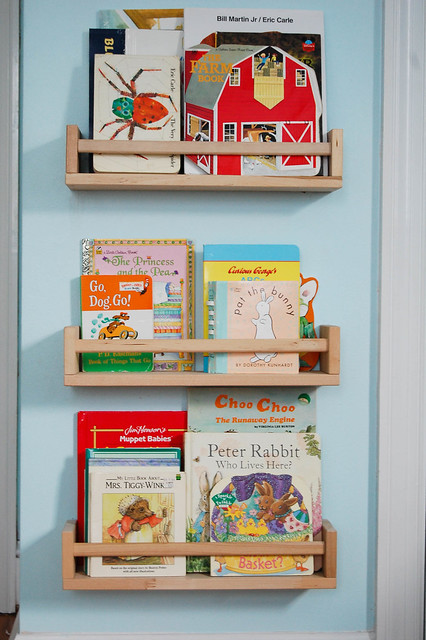
A similar idea with less DIY is using Ikea spice racks as book shelving.  The racks are inexpensive and can be painted any color you like. Domestic Simplicity has a great and accessible display of classic books.


What would you do with some rain gutters? Clean ones, of course!  As very clever person decided to use gutters as shelving for her children's school room (via odeedoh).  You wouldn't need one huge wall for this to work in your space.  A smaller length of gutter could easily be used on a smaller wall.

Monday, June 13, 2011

We Tell Stories

We Tell Stories is a website that features digital fiction from Penguin.  Each of the six stories is formatted in an innovative way.

"The 21 Steps" follows a character through a journey on Google Maps and includes points of interest along the way.

"Slice" follows Lisa through a family move to London via her personal blog posts and Tweets as well as her parents' blog and Tweets.

Other formats for the stories include choose your own adventure, writing in real time, and telling a non-fiction story through graphic means. Any of these digital stories would make a great template for a class project.  English, history, geography, science...the options are unlimited!

"The 21 Steps" is especially adaptable to many different subject areas.  Using Google Maps or any other mapping software, students can create a digital tour of their city, state, or the country highlighting historical sites, geographical places of interest, or literary sites.  Science classes could use this idea to map butterfly or bird migration, map constellations with Google Sky

We Tell Stories was awarded Best in Show at the South by Southwest Web Awards in 2008 (BBC article).

Wednesday, June 1, 2011

Feed by M.T. Anderson

Genre - Science fiction

Rating - 4/5

Age group recommendation - Grades 11-12
 
The Scoop - In a futuristic world where most people have computer implants in their heads to access information, a boy named Titus meets an unusual girl on the moon who changes his life.

The Story - In this future world, corporations run everything including the Feed, the constant stream of data each person experiences through their implants. Titus and his friends have always had their Feeds and attend School, Inc.  Violet got her feed when she was older than most and is home schooled.  Because of the late addition of the Feed to Violet's brain, she begins to have physical problems.  

I listened to the audio version of this book.  When it first began, I wasn't sure if I would make it through the whole thing!  Anderson writes the language of teenagers  perfectly and David Aaron Baker, the voice artist, performs the text amazingly. To give you an idea of the teen speak in this book, this is a world where even the parents say things like "Dude, you like, totally need to listen right now, dude." Additionally, the audio version contains ads that would be playing on Titus' or other characters' Feeds; it is a very effective device for the story, especially in audio format.  At times I felt completely bombarded with ads and TV shows.

The story in the midst of all the media is a really good one. Titus is attracted to Violet because she is different from anyone he's met before.  She sees the world differently and comes from a very different socio-economic background.  Violet encourages Titus to see beyond the constant stimulus of the Feed or to at least think about what he's being exposed to. 


Educational applications 


Feed addresses so many things that are regular parts of many students' lives - technology overload, fitting in (or not) with a group, consumer culture, and first love. This novel would be a great companion to a sociology lesson or as an example for writing interestingly about social and cultural issues.

Feed by M.T. Anderson
New York : Random House Listening Library, 2002
Copy from Dekalb County Library

Wednesday, May 25, 2011

AASL Lesson Plan Database


The American Association of School Librarians recently introduced a Standards for the 21st Century Learner Lesson Plan Database.  As one would expect, the lesson plans meet the Standards for 21st Century Learners!  The plans are searchable by basics like grade level and subject area, but are by more specific criteria like collaboration level, lesson time, and resources needed. All lessons in the database are vetted by AASL reviewers, so you can trust the quality of the lesson. 

Using the database requires an account and logging in.  The registration process is quick and painless! Once registered, users can bookmark lessons, rate and comment on lessons, share lessons via social media, and publish lessons to the database. 

This is an excellent tool to help school library professionals work smarter!

Tuesday, May 17, 2011

Merriam-Webster.com

 Merriam-Webster.com is a great resource for more than just definitions of words. 

In addition to definitions and synonyms, M-W.com also has an audio pronunciation of words. Non-native English speakers can use this feature to hear a correct pronunciation as well as see the pronunciation and spelling.

The word of the day email is a great way to expand your (and your students') vocabulary.  Word of the day as a regular feature in the library is a great way to get the whole school on a vocabulary expanding kick!
 
Another fun and useful feature is 10 Ways to Improve Conversation.  Use Merriam-Webster's list, or customize your own list of current vocabulary words for students to work into their conversations and school work. 

Wednesday, May 11, 2011

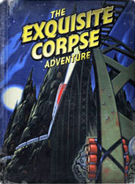
Library of Congress : Exquisite Corpse Adventure

The Exquisite Corpse Adventure is another great idea from the Library of Congress website.

An exquisite corpse is a collaborative work in images or text in which each person adds to the others'.  The LC's Exquisite Corpse Adventure was started by Jon Sczieska and features other writers like Kate DiCamillo, Nikki Grimes, and M.T. Anderson, so you know it will be good!  The story segments are great read aloud material, there are also podcasts to listen to, and an accompanying game to test students' reading/listening comprehension.  The game is a fun interactive style with images, so students will enjoy testing themselves.  The text, podcast, and game is appropriate for upper elementary through high school. 

Any age group can create their own exquisite corpse. Once students understand the concept, groups of three or four can get started.  Depending on the time available and the age group, each student can contribute a sentence, a paragraph or a page to the exquisite corpse.  This is a great opportunity for collaboration with the English teacher and the Art teacher.  Students can augment their original text with original art work. 

Wednesday, May 4, 2011

Thirteen Reasons Why by Jay Asher

When Clay Jensen receives a box of audio tapes in the mail from the girl he had a crush on, he is led through the reasons why she committed suicide.  Hannah Baker explained her thirteen reasons to thirteen people who played a role in her death.  The audio tapes make their way from person to person like a chain letter. 

This book has had so many accolades that I really wanted to like it. Asher's writing style is interesting and engaging, but the premise of the book is heavy-handed.  The device of the audio tapes is a unique way to have a deceased character in the story, but it often feel contrived and does not effectively convey Hannah's emotional state. As an adult reader, Hannah's reasons struck me as very temporary and not cause for self-harm.  I realize that many teenagers can not see past this moment and the problems they encounter are often overwhelming. For that reason,  I think that teen readers would relate to many of the problems Hannah had and it would make for an interesting discussion with their reactions.

Interest/Reading Level: Grades 11-12

Georgia Performance Standards:

ELAACRAC3 The student synthesizes content information and stylistic devices from the reading to demonstrate improvement in writing.

ELA12LSV2 The student formulates reasoned judgments about written and oral communication in various media genres. The student delivers focused, coherent, and polished presentations that convey a clear and distinct perspective, demonstrate solid reasoning, and combine traditional rhetorical strategies of narration, exposition, persuasion, and description.

Activities: Students come up with their own idea of how a character communicates from beyond the grave through non-paranormal means.  With so many media choices available, students can choose one medium or a variety of mediums working together. For example, a blog with scheduled posts that are published after death, videos that can be found only through scavenger hunt clues sent through the postal service, the possibilities are unlimited!

Two class periods would be needed for this project.  Class one - group discussion of the use of the cassettes as a literary device, rate it's effectiveness, discuss why or why not.  Students begin working on their own short story using their chosen device.  If necessary, students continue working on the story as homework. The story should be at least one page, should set up the device to work in the story, and may be part of a larger story.